Padel rules: the complete guide for beginners
Padel rules explained simply: the serve, the glass walls, the scoring, the faults and how it differs from tennis. Everything you need before your first match.
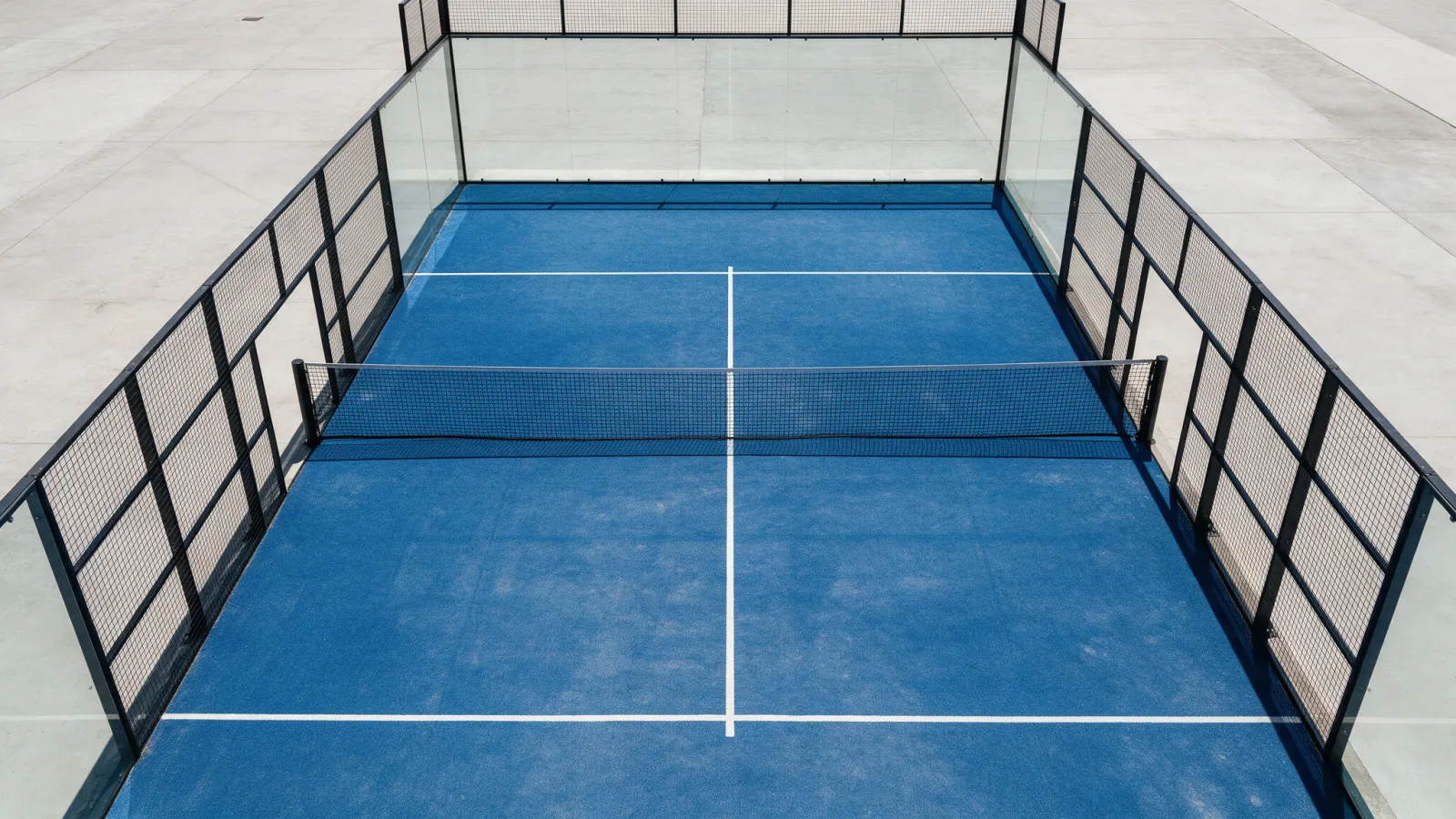
Padel is played four to a court, on an enclosed court 20 m by 10 m, where the glass and the mesh are part of the game. Scoring is the same as tennis: 15, 30, 40, game. The serve is hit at or below waist height after a bounce, diagonally. Once the ball has bounced, it may come off the walls and still be played. A shot that reaches the opponent’s wall before bouncing on the floor loses the point.
The court, in one sentence
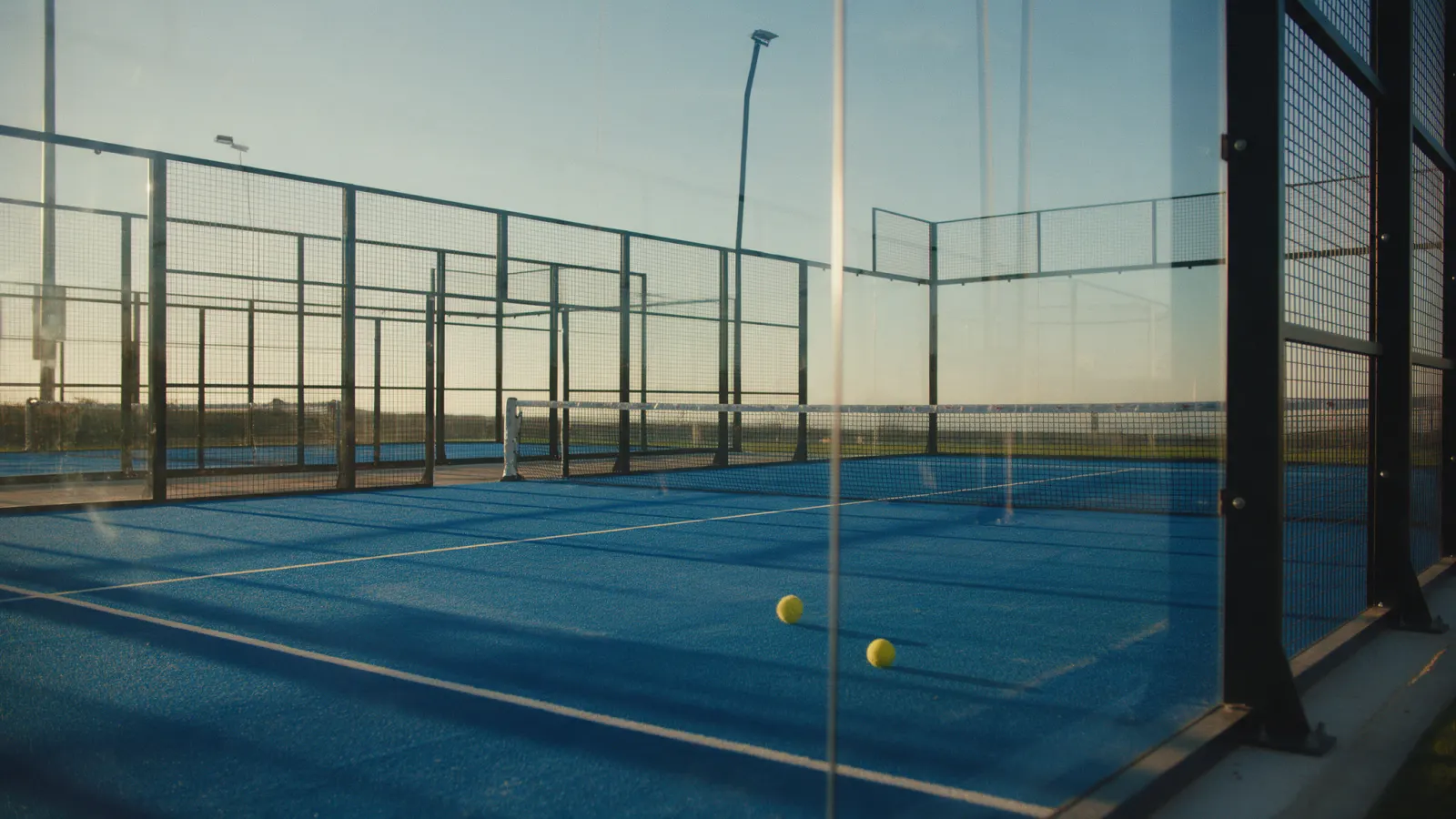
A padel court is 20 metres long and 10 metres wide, divided by a net 88 cm high at the centre and 92 cm at the posts. Service lines are 6.95 m from the net. Back walls stand 4 metres high, and the sides combine glass and metal mesh. The full layout is in the guide to padel court dimensions.
The serve
The server stands behind the service line, lets the ball bounce on the floor, then strikes it at or below waist height with at least one foot on the ground. The serve is hit diagonally, as in tennis: from the right-hand side into the receiver’s left service box, alternating sides each point.
It is a fault if the ball lands outside the correct box, touches the metal fence before its second bounce, or if the server steps on the line before contact. There are two attempts, and a serve that clips the net and still lands correctly is replayed.
Keeping score
Scoring is tennis scoring: 15, 30, 40, game; six games with a two-game margin for the set; two sets to win the match. At 40-all, two systems are in use:
- Advantage, as in tennis: win two points in a row.
- Golden point: a single point decides the game, and the receiving pair chooses its side. This is the common choice in competition and at club nights, because match length becomes predictable.
The walls, which change everything
This is the rule that separates padel from tennis. The ball must bounce on the floor first in the opponent’s half. Only then may it come off the glass or the mesh, and the opponent may play it before it bounces a second time.
In the same way, a player may let the ball bounce on their own side, let it rebound off their own glass, and return it from there. It is the first shot anyone learns, and the reason rallies last.
A return that flies straight into the opponent’s wall without bouncing on the floor loses the point. Volleys are allowed everywhere except on the return of serve, which is always played after the bounce.
How a point is lost
| Situation | Result |
|---|---|
| The ball bounces twice on your side | Point lost |
| Your shot hits the opponent’s wall or mesh before the floor | Point lost |
| The ball hits you or your partner | Point lost |
| You touch the net, or cross to the other side | Point lost |
| Both partners hit the same ball | Point lost |
| Two service faults in a row | Point lost |
Leaving the court to play the ball
When the ball leaves the court after bouncing, a player may go out through the side doors to fetch and return it, if the club allows it and the court has openings. Going out where the competition rules forbid it is a fault.
Padel and tennis: the differences that matter
| Padel | Tennis | |
|---|---|---|
| Court | 20 × 10 m, enclosed | 23.77 × 10.97 m for doubles, open |
| Serve | Below the waist, after a bounce | Overhead, no bounce |
| Walls | Part of the game | None |
| Racket | Solid, perforated, no strings | Strung |
| Format | Nearly always doubles | Singles or doubles |
The scoring is identical, so a tennis player already knows how to keep score in padel.
Your first game
- Let it bounce. The tennis instinct is to volley; in padel, letting the ball go to the wall and come back almost always gives you an easier shot.
- Play cross-court. The diagonal is the safest ball: it crosses the lower part of the net and gives the opponent less angle.
- Move together. Both partners step forward and back at the same time, level with each other.
- The lob is a weapon, not an admission of weakness: it pushes the other pair back and hands you the net.
Sources
- International Padel Federation (FIP), Rules of Padel: the reference for the serve, the scoring and play off the walls.
- Court dimensions and net heights checked against the FIP’s published specifications, read on 22 September 2026.
Frequently asked questions
Is padel always played with four players?
Almost always. Doubles is the normal format and courts are built for it. Narrower singles courts exist, but they are rare in clubs.
Do you have to serve underarm?
It is the only legal serve in padel: the ball must bounce on the floor, then be struck at or below waist height with at least one foot on the ground.
Can the ball hit the glass?
Yes, as long as it has bounced on the floor first. After that bounce it may hit the glass or the mesh, on either side of the net, and stay in play.
What happens if the ball hits the mesh before the floor?
The player who hit it loses the point. A return must always bounce on the opponent’s floor before touching anything else.
Is the scoring the same as tennis?
Yes: 15, 30, 40, game, and six games with a two-game margin for the set. At 40-all, many competitions play a golden point, which decides the game on a single point.
Do I need a special racket?
Yes. A padel racket is solid and perforated, with no strings, and shorter than a tennis racket. Most clubs hire them out, which is enough to try the game.