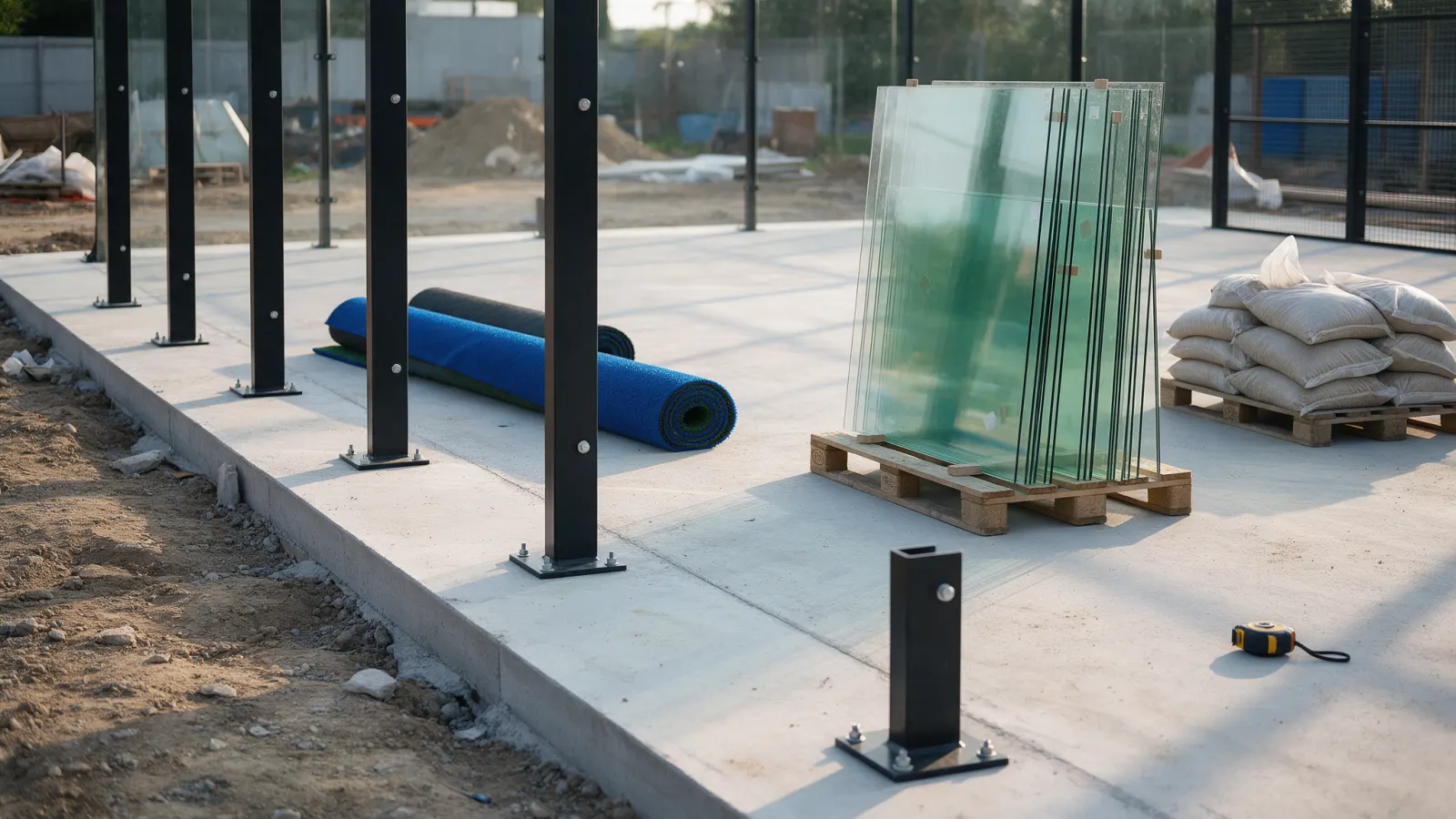
Building a padel court: steps, surface and what drives the cost
What building a padel court involves: the plot, the slab, the structure and glass, the turf, the lighting, the permits, and what makes the cost move.
Building a padel court is five jobs: the plot, the slab, the structure and glass, the artificial turf, the lighting. Allow 20 m by 10 m of playing area, at least 6 m of clear height, and room to walk around. A quote is driven mainly by three things: covered or not, the thickness and origin of the glass, and the state of the ground before you start.
1. The site and the permissions
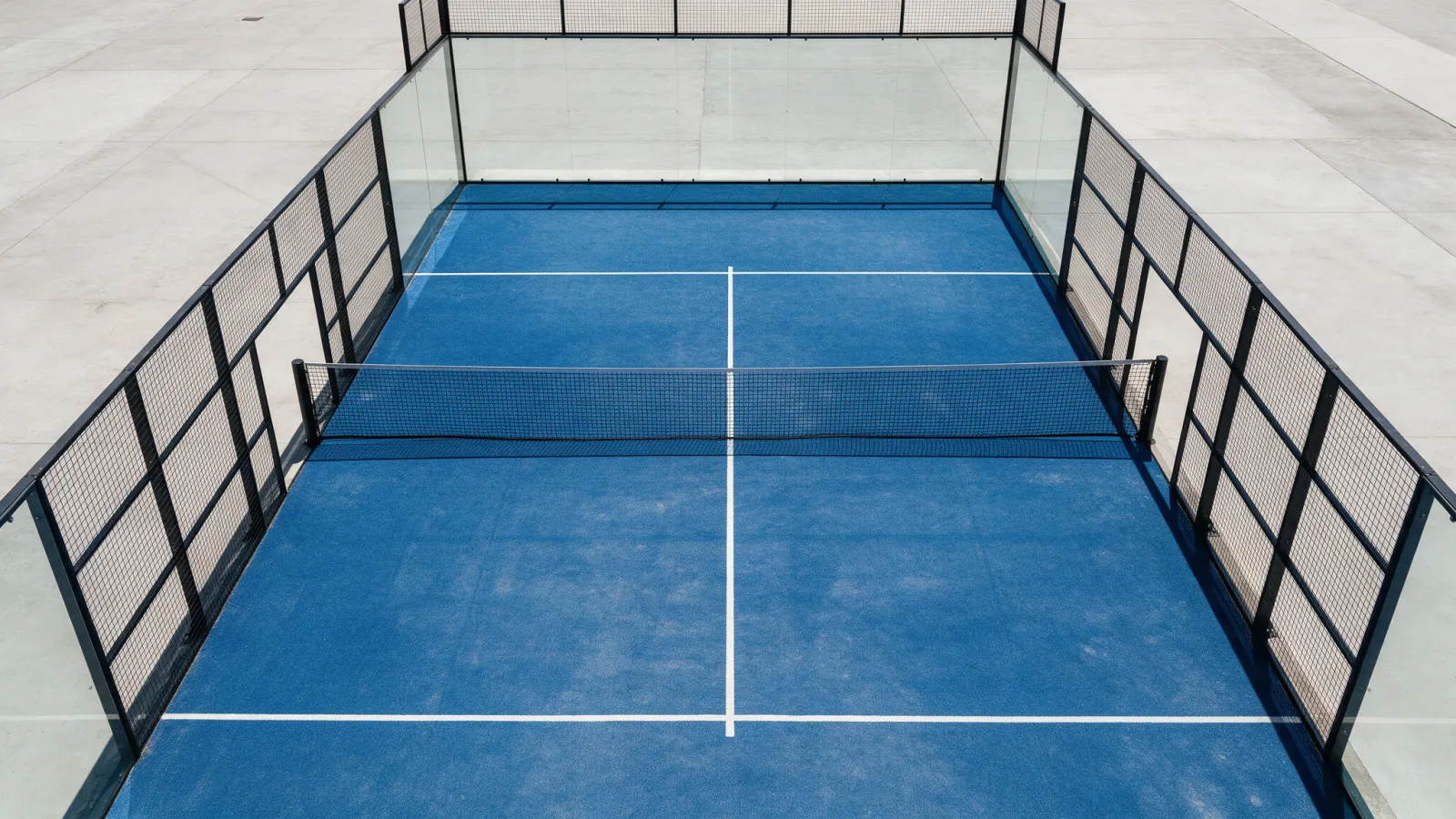
The playing area is 200 m², but a court does not stop at its walls: it needs the structure, the doors and a walkway to get in, out and around for maintenance. Before drawing anything, check three points with your local authority: what the plot allows you to build, what a covered structure implies, and the rules on noise and lighting if you plan to play in the evening. A club in a residential area that installs floodlights without asking can be made to switch them off.
If you plan several courts, draw them together from the start. The space between courts, the access and the clubhouse are decided once; fixing them later costs more than planning them.
2. The slab
This is the part you stop seeing once the court is finished, and the one that decides how long it lasts. A padel slab must be flat, stable and either draining or correctly sloped: a puddle in the middle of the court after a shower is an hour of play lost every time it rains. Builders work in reinforced concrete or on a raised structure; the choice depends on the ground and the existing slope.
Flatness defects are paid for in unpredictable bounces. This is the line not to cut, because it is the only one that cannot be redone without dismantling everything.
3. Structure and glass
The metal structure carries the glass and the mesh. The glass is tempered, at a thickness that always appears on the quote: it is one of the first price differences between two offers, along with the anti-corrosion treatment of the structure. In a coastal climate, ask exactly what is planned against corrosion, and what the warranty covers.
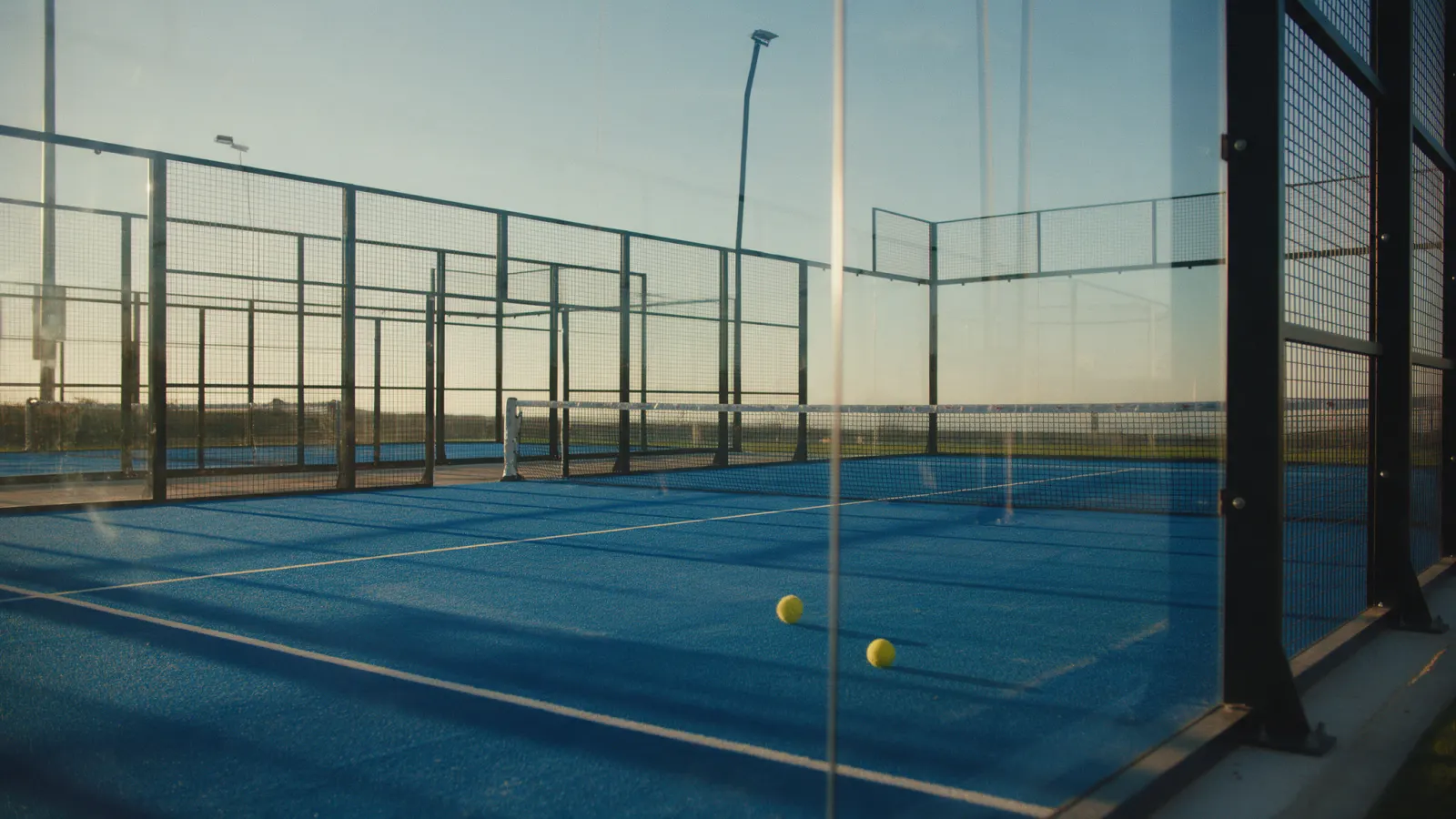
The back wall stands 4 metres high, glass then mesh. The sides combine both according to the configuration chosen. Check that the model offered follows the federation’s rules if you ever intend to host official competition.
4. The artificial turf
Turf is laid on the slab and filled with sand. Its fibre height and density change the speed of play: a denser turf slows the ball and tires the legs less. It is the layer that wears fastest, especially under strong sun, and the one you replace when the court has a few years behind it. Ask for the stated life in hours of play, not in years: a court running twelve hours a day is nothing like a family court.
5. Lighting
A court without lights loses all its profitable hours, because adult players come after work. Floodlights are sized by the light level on the ground and by its evenness: dark patches or glare make the lob unplayable. Put the controls near the desk and add a timer: it is the simplest way to avoid courts lit all night.
What moves a quote
| Item | What changes the price |
|---|---|
| Covered or open | A roof adds a frame, heavier foundations and a clear height to respect. It is the largest difference in any quote. |
| The starting ground | Flat, stable ground is quick to prepare; a sloping, filled or wet plot needs work before the slab. |
| The glass | Thickness, origin, fixings. Two quotes that look close often differ here. |
| The structure | Profile sections, anti-corrosion treatment, warranty. |
| The turf | Density, fibre height, stated life. |
| The lighting | Number and power of floodlights, target light level. |
| Transport and assembly | Distance, access for machinery, length of the build. |
Always ask for a quote itemised line by line rather than a single figure: it is the only way to compare two offers, and to see what was taken out to hit a price.
After the build: keeping the court busy
A padel court only pays when it is busy at the hours people play: evenings and weekends. Three things help, and none of them is a heavy investment.
- Slots visible online. A player who has to phone to find out whether a court is free gives up more often than they call back.
- Organised sessions. Americanos, internal tournaments, beginner nights: they fill the quiet hours and keep players coming. The tournament generator builds the schedule in one click.
- A findable page. Players search for “padel” followed by their city. A club with only an Instagram page ranks behind the directories.
Sources
- International Padel Federation (FIP), court specifications: dimensions, wall heights, clear height. Read on 22 September 2026.
- The cost items listed follow the usual structure of court builders’ quotes; no amount is given here, because prices vary by country, season and project.
Frequently asked questions
How much space do you need for a padel court?
The playing area is 20 m by 10 m, or 200 m². Allow more on the plot: the structure, the doors and a walkway for circulation and maintenance.
How much height does a covered court need?
At least 6 metres clear of any obstacle above the court. A frame or a light any lower makes lobs unplayable, and height cannot be added after the build.
How much does a padel court cost?
The quote depends mainly on whether it is covered, the state of the ground before work starts, the thickness of the glass and the structure. Ask several builders for an itemised quote: it is the only comparison that means anything.
Can you put a padel court on a tennis court?
A tennis court gives roughly the right footprint, but the slab, the drainage and the access have to be redone, and the space around redrawn. It is a building job, not an installation.
How long does a padel court last?
The slab and the structure last for years when properly treated; the artificial turf wears out first. Ask for its life in hours of play rather than years, since everything depends on how busy the court is.